
Annual Preventive Care Exams Matter More Than You Think
written by Dr. Traci Baker
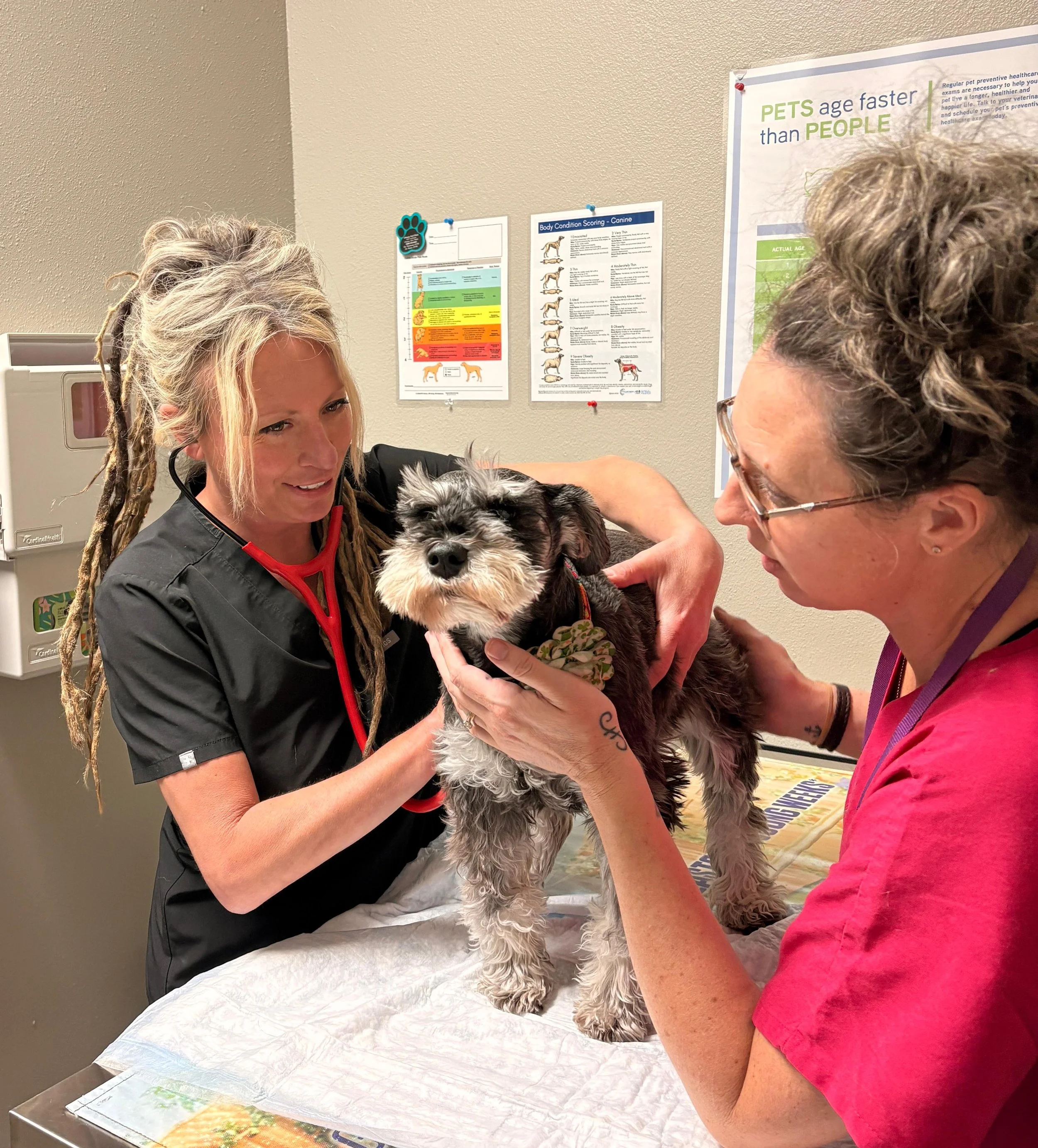
At Cheney Veterinary Clinic, we believe that great medicine isn’t just about treating illness—it’s about staying ahead of it.
Annual preventive care exams are one of the most important ways we do that.
Even when your pet seems perfectly healthy, these visits give us a chance to look deeper, ask better questions, and catch subtle changes before they become bigger problems.
What Happens During an Annual Exam?
Preventive care isn’t just a quick check-in.
At Cheney Veterinary Clinic, an annual visit is designed to give us a complete, real-time picture of your pet’s health.
Every appointment is built around four key components—each one playing a different role in understanding not just how your pet looks on the surface, but what may be happening beneath it.
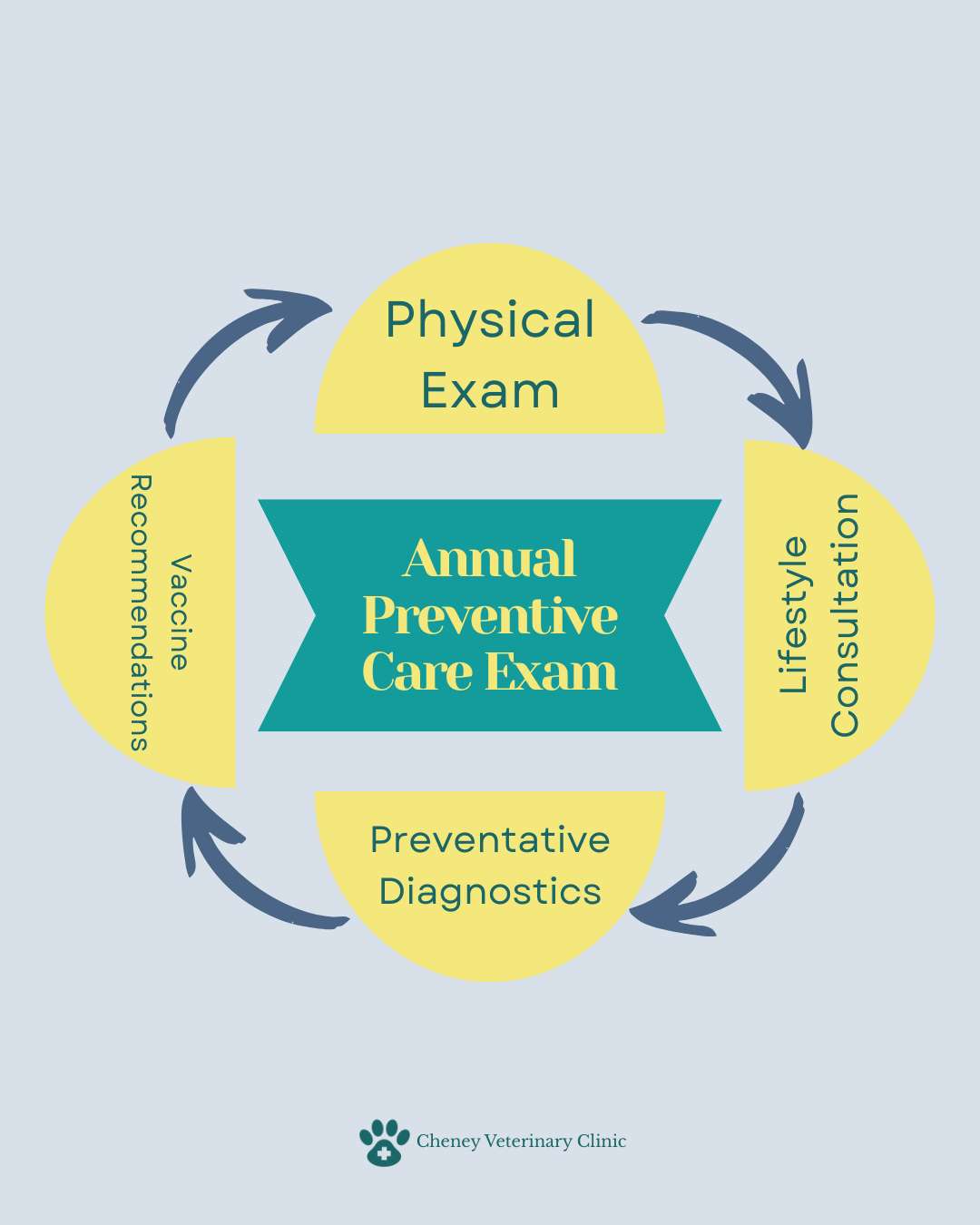
1. A Thorough Physical Exam
Every visit begins with a comprehensive, nose-to-tail physical exam.
We assess heart and lung function, evaluate joints and mobility, examine the skin and coat, check eyes and ears, and take a close look at dental health.
What we’re often looking for are subtle changes—small shifts that may not be noticeable at home but can be early indicators of disease.
2. Lifestyle Consultation
No two pets live the same life—and their care shouldn’t look the same either.
We take time to talk through your pet’s daily routine, nutrition, environment, activity level, and any changes you’ve noticed.
Whether your dog is hiking Eastern Washington trails, working on a ranch, or spending most of their time at home, those details matter.
This conversation helps us tailor recommendations that actually fit your pet’s life—not just a standard protocol.
3. Preventive Diagnostics
This is where we’re able to go beyond what we can see and feel.
Because pets can’t tell us when something feels off, diagnostics become one of the most important ways they “communicate” with us.
Routine bloodwork, urinalysis, and fecal testing allow us to evaluate organ function, identify endocrine imbalances, screen for underlying infection, and establish baseline values we can track year over year. These diagnostics include screening for common communicable diseases.
For cats, we also include a proBNP test—a cardiac screening tool that helps detect early heart disease, even before clinical signs are present.
For many pets—especially as they age—we may recommend more comprehensive panels that provide a deeper look at their health, including early screening for conditions like kidney disease, liver changes, or even certain cancers.
4. Thoughtful Vaccine Recommendations
Vaccination is not one-size-fits-all.
We build vaccine recommendations based on your pet’s age, medical history, and lifestyle risk. A dog who frequents boarding facilities or dog parks will have different needs than one who stays primarily at home.
Our goal is to protect your pet appropriately—without over-vaccinating—while ensuring they’re covered for the diseases they’re most likely to encounter.
Bringing It All Together
Each of these components works together to create a full picture of your pet’s health in that moment.
Not just how they’re doing today—but where they’ve been, and where things may be heading.
That’s the heart of preventive care: catching changes early, making thoughtful decisions, and giving your pet the best chance at a long, healthy life.
Why It Matters—Even When Your Pet Seems Healthy
Pets are incredibly good at hiding illness. By the time we see outward signs, disease is often more advanced.
Annual preventive care exams allow us to:
Detect disease earlier, when it’s easier (and often less expensive) to treat
Track changes over time by comparing yearly data
Adjust care as your pet ages and their needs evolve
For senior pets especially, these visits become even more important. Subtle changes in lab work or behavior can be the first clue that something is shifting—and catching it early can make a meaningful difference in both quality and length of life.
A Different Kind of Veterinary Visit
Preventive care visits are also a chance to talk.
We want to understand your pet’s daily life—how they’re eating, moving, behaving, and interacting with your family.
These conversations help us tailor care in a way that fits both your pet and your household.
Our goal is to partner with you—not just treat your pet.
The Bigger Picture
Preventive care is about more than a yearly appointment—it’s about building a long-term health plan for your pet.
It’s how we move from reacting to problems… to preventing them.
And it’s one of the most meaningful ways we can honor the bond you share with your animal.
If it’s been a while since your pet’s last exam, this is a good time to check in.
Preventive care is one of the simplest ways to support a longer, healthier life—and we’re here to help you make a plan that fits both you and your pet.
📞 Call or text us at 509-235-6860 to schedule an appointment.
